Hard vs Soft Tonneau Cover: Which One Fits How You Use Your Truck?
Short answer
Choose a hard tonneau cover if security and weather protection matter most. Choose a soft cover if you want the lowest price, light weight and easy removal. Hard covers cost and weigh more, while soft vinyl covers can be cut and may sag over time.
TruckBedFit is reader-supported. When you buy through links on this site, I may earn an affiliate commission at no extra cost to you. Read the affiliate disclosure
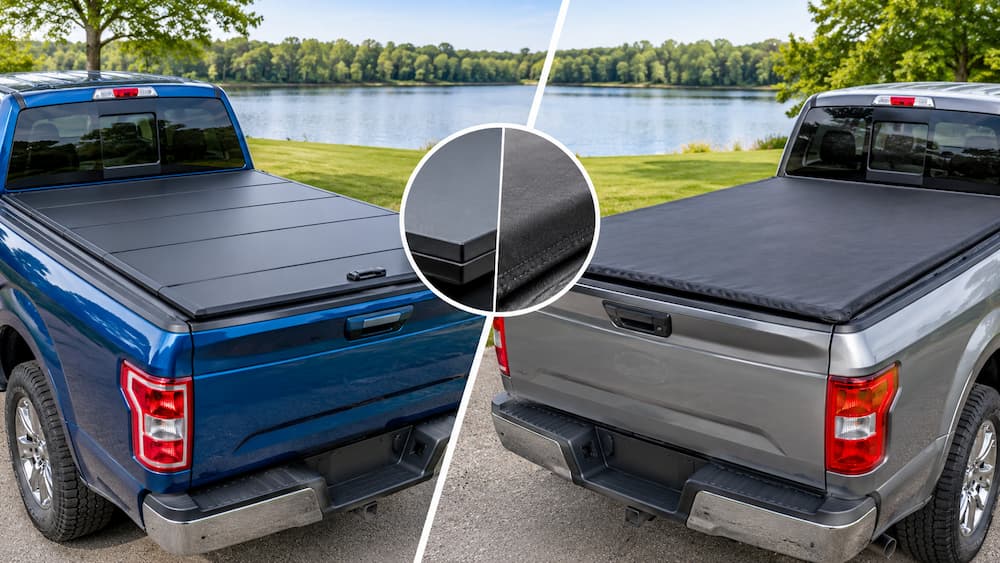
The hard vs soft decision shapes everything else about your cover: what it costs, how well it locks your cargo away, how much water gets in, and how easy it is to pull off when you need the whole bed.
Neither type is better for everyone. A contractor parking at job sites needs something different from a weekend owner who hauls furniture twice a year. This guide compares both types factor by factor, shows what owners complain about most, and ends with a clear verdict for each kind of use. If you already know you want product picks, jump to our best tonneau covers guide.
Hard vs Soft Tonneau Covers at a Glance
Hard covers win on security, weather sealing and load capacity; soft covers win on price, weight and easy removal.
Factor | Soft cover | Hard cover |
Typical price | About 150–400 | About 400–1,600; retractables often more |
Security | Deters casual theft; vinyl can be cut | Rigid panels resist cutting and prying; locks with the tailgate |
Weight on top (evenly spread) | About 15–30 lb | Often 200–400 lb |
Weather sealing | Good when new; seals and vinyl wear over time | Very good; many add drain tubes and rain channels |
Weight of the cover | Light; one person can remove it | Heavier; removal often takes two people |
Bed access when open | Full (roll-up) or about two-thirds (most soft tri-folds) | Varies: some hard folders open fully, others leave panels at the cab |
Lifespan | Vinyl can fade, shrink or sag with age | Panels last longer; latches and seals need care |
Installation | Clamp-on, no drilling | Clamp-on, no drilling (heavier to lift into place) |
Price and load figures are typical ranges from cover retailers and makers; check the spec sheet for any cover you're considering. Sources are listed at the end.
What Counts as a Hard or Soft Tonneau Cover?
The difference is the material that covers the bed. Soft covers use a fabric, usually vinyl, stretched over a frame; hard covers use rigid panels of aluminum, fiberglass, composite or ABS plastic.
Group | Common styles | How it opens |
Soft | Soft roll-up | Vinyl rolls toward the cab |
Soft | Soft tri-fold | Vinyl over a frame, folds in three sections |
Hard | Hard folding (tri-fold, quad-fold) | Rigid panels fold toward the cab |
Hard | Hard roll-up | Hinged aluminum slats roll toward the cab |
Hard | Retractable | Slats slide into a canister at the front of the bed |
Hard | One-piece hinged | A single panel lifts from the tailgate end |
If you want the full rundown on every style, see our guide to the types of tonneau covers.
Hard vs Soft Tonneau Cover: The Differences Explained
Eight factors decide which type suits you. Security and price usually settle it; the rest fine-tune the choice.
Security
A soft cover hides your cargo, which stops most casual theft, but a sharp blade can slice the vinyl in seconds. A hard cover's aluminum, fiberglass or composite panels resist cutting and prying. Most hard folding covers latch from inside the bed, so they are only as secure as your tailgate lock. If your tailgate doesn't lock, add a tailgate lock before you pay extra for a hard cover. For the toughest options, see the most secure tonneau covers.
Weather resistance
Both types use seals along the rails, bulkhead and tailgate, and both keep out most rain when new. Hard covers usually add rain channels and drain tubes that carry water out of the bed. Soft vinyl seals well at first, but owners report more leaks as the vinyl shrinks or loosens with age. No cover of either type is fully waterproof; see our guide to the most water-resistant tonneau covers.
Load on top and snow
Soft covers are not built to carry weight. Retailers advise keeping soft covers to roughly 15–30 lb spread evenly, so snow should be brushed off. Many hard folding and hard roll-up covers are rated for around 200–400 lb evenly spread, enough for heavy snow or light gear on top.
Removal and cover weight
Soft covers are light, and many soft tri-folds come off in minutes without tools. Hard covers are heavier; most owners need a second person to lift one off the rails. If you remove your cover often to haul tall loads, this matters more than any spec.
Bed access
A soft roll-up opens the whole bed. Most soft tri-folds fold to about two-thirds open. Hard folding covers vary: some stand up against the cab for full access, while others leave folded panels covering the front of the bed. Check the open position before you buy.
Durability and lifespan
Vinyl is the weak point of a soft cover. Sun, heat and cold can fade, shrink or loosen it, and a tear means a repair or replacement. Hard panels last longer, though hinges, latches and seals still wear and need occasional care.
Price and long-term value
Soft roll-ups and soft tri-folds sit at the bottom of the market, roughly 150–400. Hard folding covers usually run from about $400 to $1,600, hard roll-ups about 800–1,200, and retractables more. A hard cover costs more up front, but if it outlasts two soft covers, the gap shrinks.
Installation
Most covers of both types clamp onto the bed rails with no drilling. Hard covers take a little longer because the panels are heavier to place and align.
What Owners Complain About Most
The same handful of complaints shows up again and again in owner discussions. Knowing them up front tells you which trade-off you're signing up for.
Soft cover complaints | Hard cover complaints |
Vinyl shrinks and stiffens in cold weather, making latches hard to close | Heavy and awkward to remove when you need the whole bed |
Fabric can sag a little after rain and let water seep in at the front | Leaks at hinge points, around the edges or at the tailgate, often noticed during car washes |
Vinyl can be cut by a thief or torn by sharp cargo | No give for loads that sit slightly above the bed rails |
Snow left on the cover can stretch the vinyl or strain the rails | Some owners say a pry bar defeats many folding covers, so security isn't absolute |
Older snap-on designs are fiddly in the cold | Retractable canisters take bed space; ice or debris in tracks can make covers stick |
These patterns come from owner discussions such as a 2022–2023 Jeep Gladiator Forum thread on soft vs hard covers, where one hard folding owner reported leaks at the hinges and rarely needing the extra security, and older threads like this Edmunds forum discussion on cold-weather vinyl. Newer soft covers often include a tension adjuster for seasonal changes, so look for one if you live somewhere with real winters.
Which Should You Choose?
Match the cover to how you actually use your truck. If two rows fit you, pick the one you'd regret getting wrong more.
If you… | Choose | Why |
Leave tools or gear in the bed overnight | Hard | Rigid panels and a locked tailgate keep a thief out; vinyl can be cut |
Park outside through snowy winters | Hard | Carries snow load and doesn't stiffen in the cold |
Want the lowest price | Soft | Soft covers sit at the bottom of the price range |
Often haul tall loads and remove the cover | Soft | Light enough for one person to take off |
Need the whole bed open quickly | Soft roll-up, or a hard folder that stands up against the cab | Both give near-full bed access |
Keep your truck for many years | Hard | Panels outlast vinyl, which spreads out the higher price |
Lease or trade in every few years | Soft | Lower cost over a short ownership period |
Choose a hard cover if security, weather sealing or snow load matter most, and you don't mind the higher price and weight.
Choose a soft cover if you mainly want to hide cargo and keep out rain, care about price, and value easy removal.
Middle-Ground Options
If neither type fits perfectly, two styles sit in between.
Hard roll-up covers use aluminum slats under a vinyl skin. They roll open like a soft cover for full bed access but resist cutting and carry far more weight.
Hard tri-folds with full access fold their panels and then stand up against the cab, so you get hard-cover security without losing the front of the bed.
Both cost more than soft covers, so they make sense when you need security and full access at the same time. If you regularly haul cargo taller than the bed rails, a truck cap may suit you better; see tonneau cover vs camper shell.
Ready to Pick a Cover?
Once you know which type you want, these guides show the best options and how to fit them.
Want a hard cover? See the best hard tonneau covers, or go straight to hard folding covers.
Want a soft cover? Start with the best roll-up tonneau covers or tri-fold covers.
On a budget? Compare the best cheap tonneau covers.
Not sure of your bed size? Use our guide on how to measure your truck bed first.

Written by
Ismail Shah
Hi, I’m Ismail Shah, the founder of TruckBedFit and a software engineer by profession. I research truck bed fitment the way I debug code: by cross-checking every bed size, part number and fitment claim against manufacturer specs, retailer listings and long-term owner reports. I don’t test products myself, and I don’t own a truck yet. This site is how I’m working toward my first one.